
CROP 05 · STRUCTURE NOTES
Leafy crops are a density problem, not a height problem.
Lettuce and leafy greens are grown close to the ground at high density. The frame stays low, the spans can be wide, and the expensive parts are the benches, the water line and the airflow.
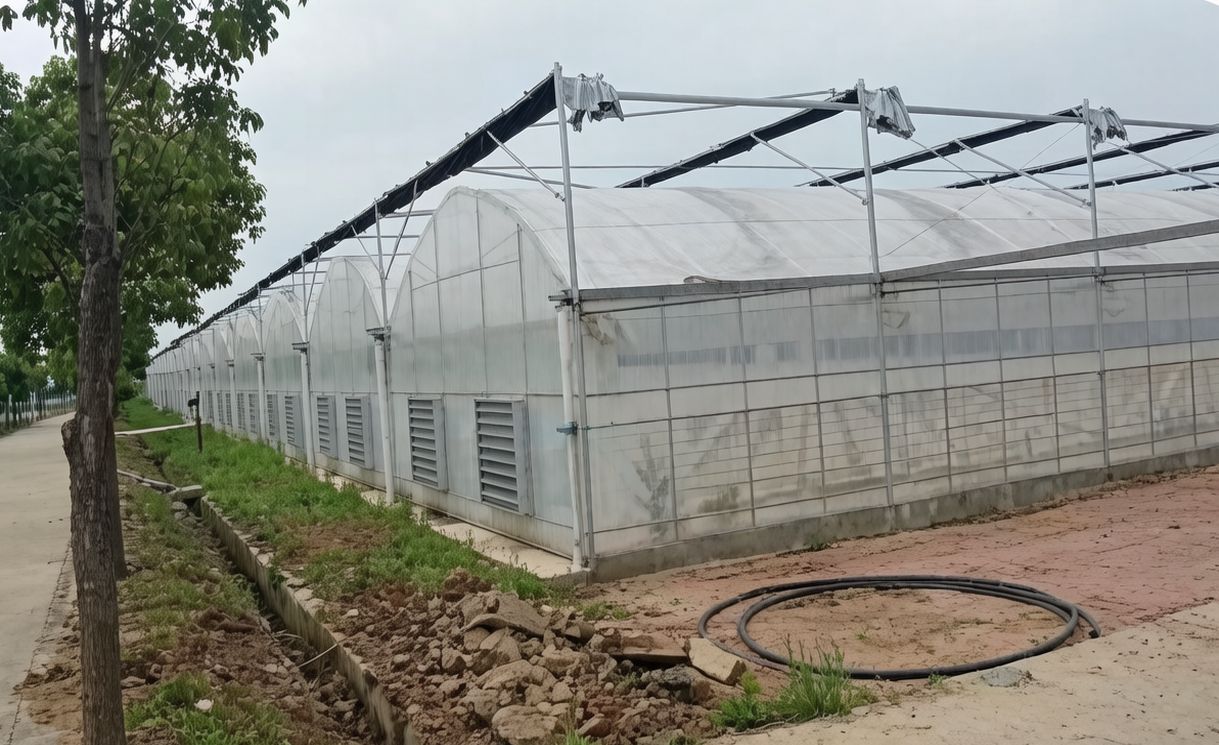
Because the crop is low, the house can be wide without wasting volume — which is why leafy-green operations tend toward 9.6 and 12 m spans. The saving is in the gutter lines and the side walls, not in the arch section.
| Decision | Why |
|---|---|
| Span 9.6–12 m | fewer gutter lines per m² |
| Eaves 2.5–3.5 m | crop height plus access |
| Wide ridge vent | heat removal at low canopy |
| Benches or NFT | density and hygiene |
| Level floor | water line and drainage |
The steel scope here is often modest — the frame plus a bench grid. That makes the quotation easy to compare, and makes the tolerance more important: a bench grid that is out of level shows up immediately in a hydroponic system.
Where the money goes
On a leafy-green project the frame is typically a small share of the capital. Do not save 3 % on steel and lose 10 % on a bench grid that cannot be levelled.
Related
Read next
Pages that answer the question this page raises.
- 05.01Multi-span film houseMulti-span film greenhouse frames: 6.2–12 m span, gutter-connected, galvanised oval arches→
- 08.02Span, bay, eavesHow span, bay and eaves height affect greenhouse frame sections, weights and cost. Design →
- 06Crop guidesGreenhouse structure by crop: tomato, cucumber, pepper, strawberry, leafy greens, blueberr→
- RFQ builderBuild a greenhouse frame RFQ: select tube, profiles, gutters and system lines, add project→
NEXT STEP
Quote a house around your leafy greens & lettuce plan
Send the crop plan: row spacing, support height and vent target. We will translate it into a frame schedule you can price.