
CROP 09 · STRUCTURE NOTES
Mushrooms need darkness and insulation, not light and vent.
A mushroom house inverts the usual requirements: the cover must exclude light, the structure must hold insulation, and ventilation is controlled rather than maximised.
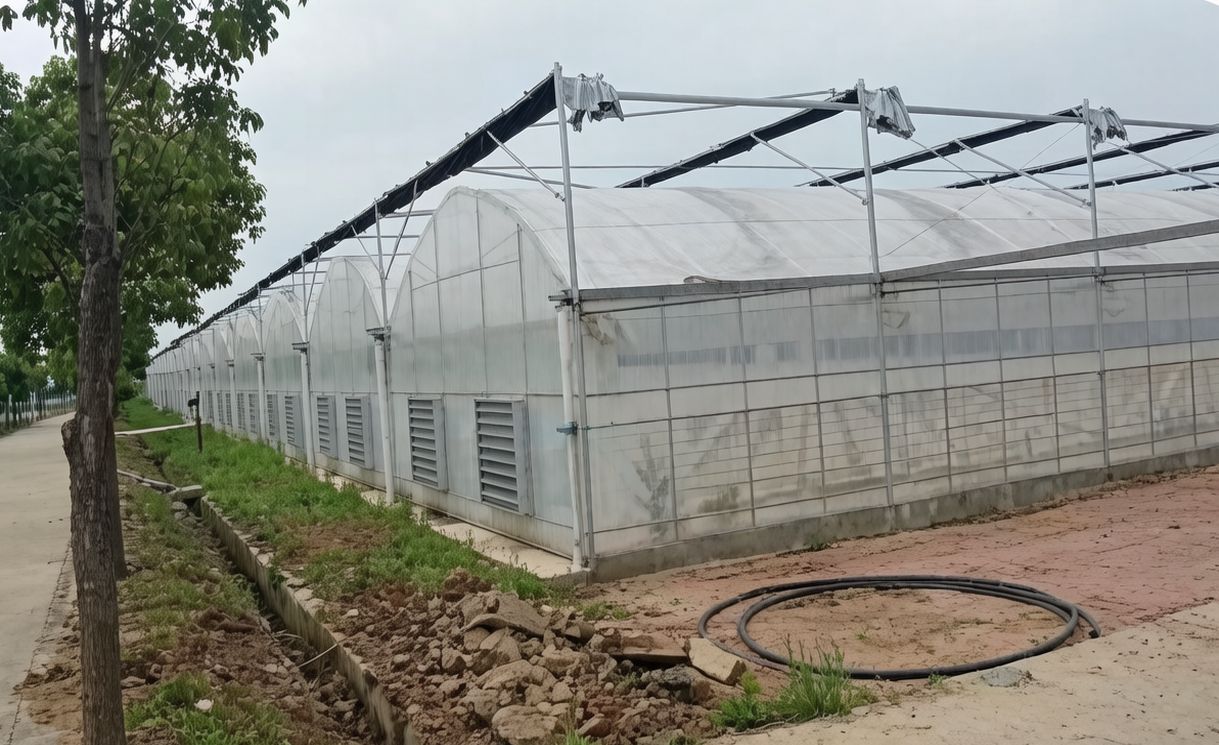
The structural consequence of blackout is weight: insulation panels, blackout film and racks all hang from or sit on the frame. A mushroom house is a shed with a controlled environment, and the steel has to carry the insulation as dead load.
| Item | Effect |
|---|---|
| Blackout cover | double layer, no light leak at joints |
| Insulation | panel weight on purlins |
| Controlled vent | filtered inlets, fan ports |
| Racks | floor load, aisle width |
| Humidity | corrosion risk at wet interfaces |
Humidity is the corrosion driver. In a mushroom house, pre-galvanised at a cut end is a weak point within a season. Hot-dip after fabrication, or a sealed detail, is the right answer — and it is cheaper than replacing a frame.
Insulation is a load
Ask the insulation supplier for kg/m², add it to the dead load, and check the purlin spacing. Build-up panels are heavier than they look.
Related
Read next
Pages that answer the question this page raises.
- 05.01Multi-span film houseMulti-span film greenhouse frames: 6.2–12 m span, gutter-connected, galvanised oval arches→
- 08.02Span, bay, eavesHow span, bay and eaves height affect greenhouse frame sections, weights and cost. Design →
- 06Crop guidesGreenhouse structure by crop: tomato, cucumber, pepper, strawberry, leafy greens, blueberr→
- RFQ builderBuild a greenhouse frame RFQ: select tube, profiles, gutters and system lines, add project→
NEXT STEP
Quote a house around your mushroom plan
Send the crop plan: row spacing, support height and vent target. We will translate it into a frame schedule you can price.